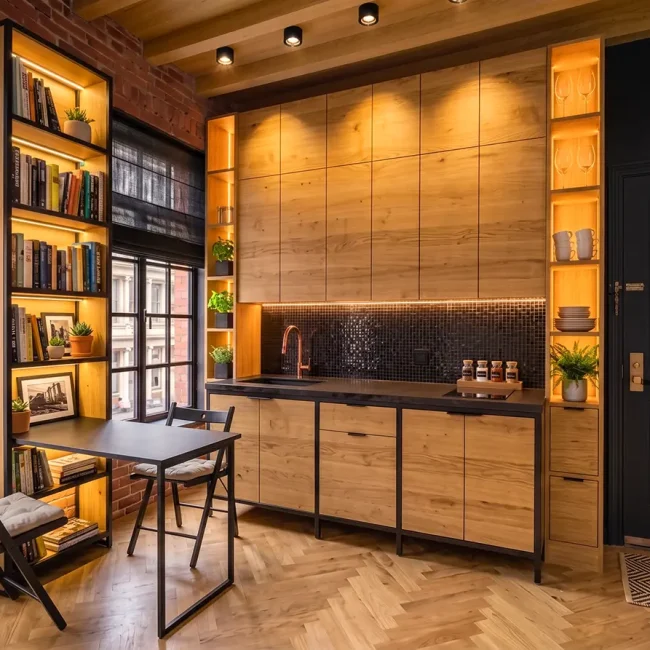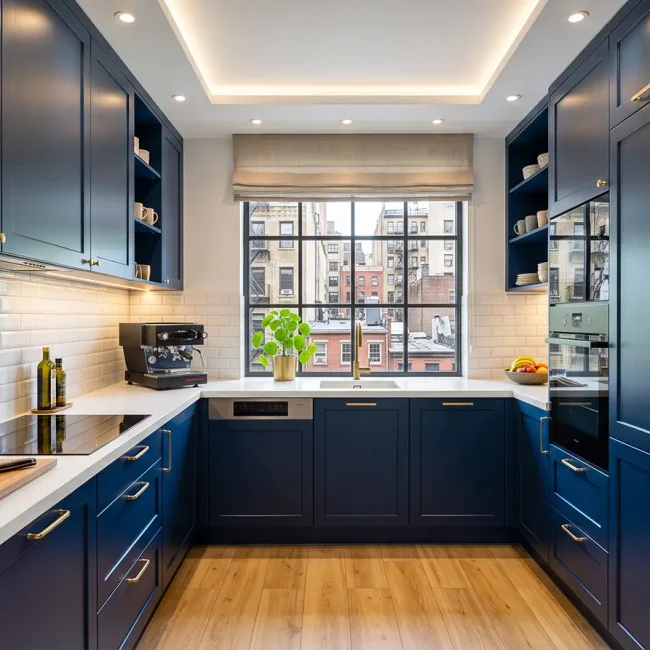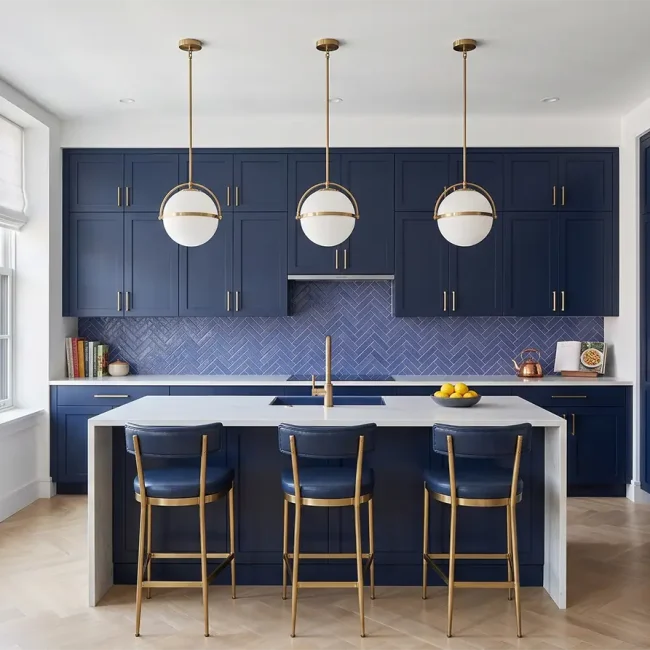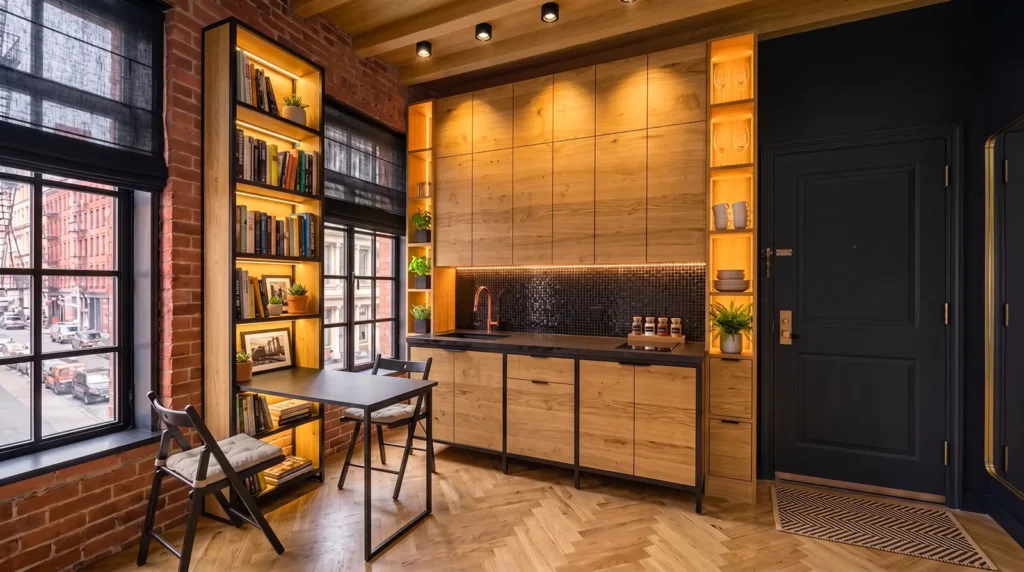
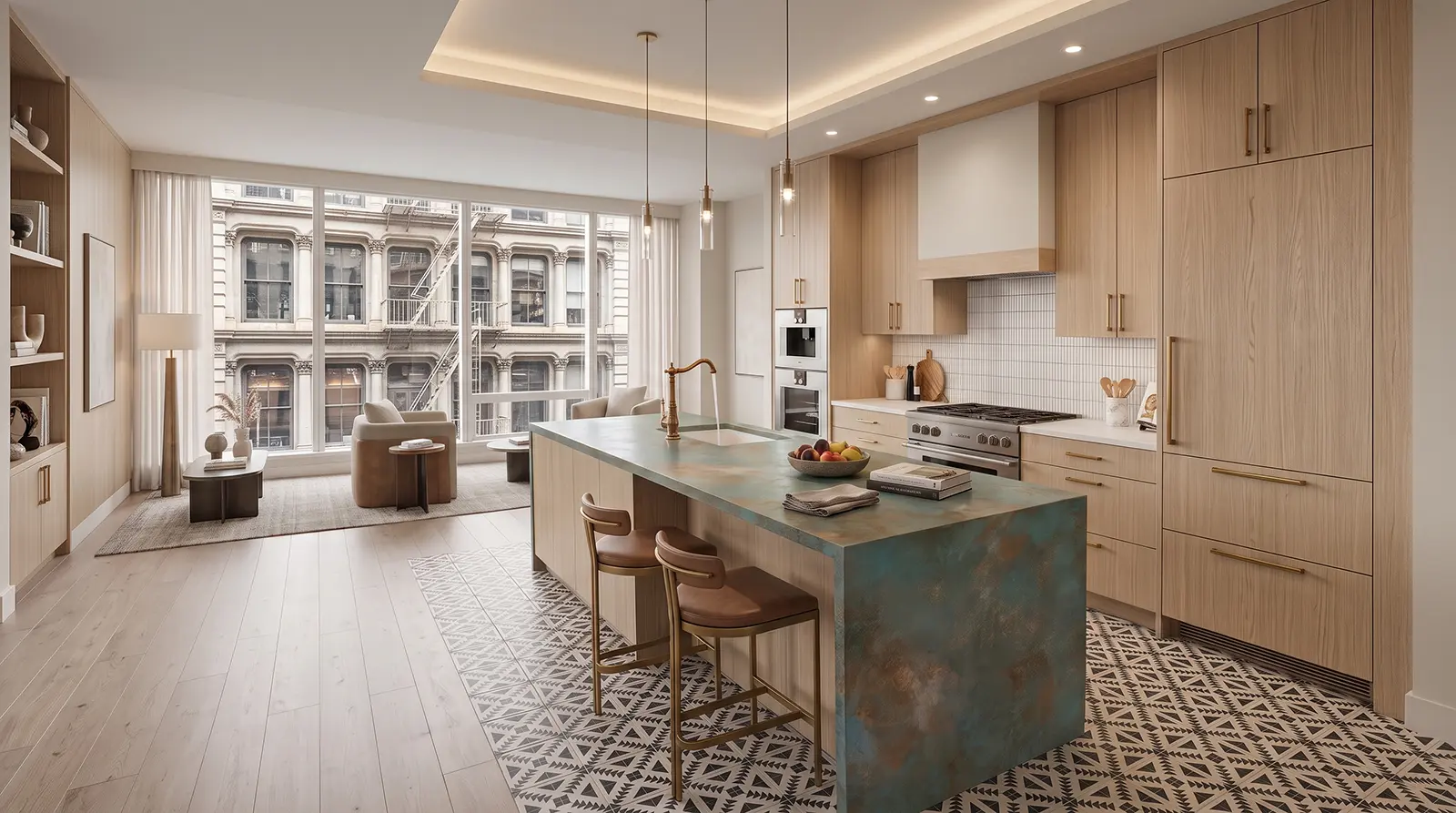
Choosing between different types of kitchen countertops is rarely just a design decision. The surface has to tolerate heat, spills, daily cleaning, knife work, small appliances, coffee, wine, citrus, oils, and the practical realities of how the kitchen will be used. It also has to work with cabinetry, backsplash, lighting, edge profiles, seams, and the overall scale of the room.
In NYC apartments, countertop decisions tend to be even more specific. A compact kitchenette often needs a quiet, low-maintenance surface that does not visually overwhelm the space. A larger loft kitchen may have enough room for more expressive materials, such as marble with stronger veining, a stone island, a full-height slab backsplash, or a waterfall countertop panel. The same material can behave very differently depending on scale, finish, color, fabrication details, and the homeowner’s expectations for maintenance.
This guide reviews and compares several of the most common kitchen countertop materials, including quartz, marble, quartzite, porcelain slab, sintered stone, and granite. It looks at durability, maintenance, cost, aesthetics, and practical use, so homeowners can understand how each surface performs in daily kitchen life. The goal is not to name one favorite material. The better question is which surface fits the kitchen, the apartment, and the way the household actually lives.
Table of contents
- Why Countertop Material Should Be Decided Before the Final Kitchen Design
- Quick Kitchen Countertop Materials Comparison
- Quartz Countertops: Consistent, Practical and Low Maintenance
- Marble Countertops: Natural Beauty With Higher Maintenance
- Quartzite Countertops: Natural Stone With Strength and Movement
- Porcelain Slab and Sintered Stone Countertops: Thin, Strong and Modern
- Granite Countertops: Not Outdated When the Stone Is Chosen Carefully
- Which Countertop Materials Work Best in Small, Medium and Large Kitchens?
- Design Details That Change How a Countertop Performs
- Cost Considerations for Kitchen Countertops
- What to Confirm Before Selecting a Countertop Material
- FAQ: Types of Kitchen Countertops
- The Right Countertop Material Depends on Use, Scale and Detail
Why Countertop Material Should Be Decided Before the Final Kitchen Design
Countertops are often selected around cabinet style and color, but they define more than the visible appearance of a kitchen. They also influence how the kitchen functions. A countertop affects cabinet dimensions, overhangs, sink cutouts, backsplash height, appliance clearances, island proportions, seam placement, edge details, and installation sequence.
Some materials work beautifully as thin, minimal surfaces, while others need a thicker visual profile or a built-up edge. Some can create striking waterfall panels. Others work better as quieter counter surfaces with a separate backsplash. A large natural stone slab may become the main architectural feature of the kitchen, while a low-movement quartz may support a more restrained cabinetry design.
The choice of countertop material also affects long-term maintenance. A homeowner who cooks often, uses the kitchen daily, and wants a surface that requires very little attention may make a different choice than someone who values the patina of natural stone and accepts more careful cleaning.
In a kitchen renovation, countertop material should be coordinated with cabinetry and fabrication early. Once cabinets are built, appliances are ordered, and rough-ins are placed, late changes to the countertop can affect dimensions, seams, supports, and installation timing.
Quick Kitchen Countertop Materials Comparison
The table below gives a practical overview of the most common countertop material options discussed in this guide.
| Material | Best for | Main strengths | Main cautions |
|---|---|---|---|
| Quartz | Busy kitchens, compact kitchens, low-maintenance homes | Nonporous, consistent appearance, broad color range, no sealing | Can be damaged by high heat; not a natural stone |
| Marble | Design-led kitchens, classic interiors, statement islands | Natural veining, depth, character, strong visual identity | Etching, staining risk, higher maintenance, patina over time |
| Quartzite | Natural stone kitchens needing durability and movement | Hard natural stone, often marble-like appearance, strong durability | May need sealing; quality and stone classification must be verified |
| Porcelain slab / sintered stone | Modern kitchens, full-height backsplash, thin profiles | Stain resistance, heat resistance, large-format panels, low maintenance | Edge chipping and fabrication require experienced handling |
| Granite | Durable kitchens, natural stone surfaces, contemporary dark or honed applications | Heat resistance, scratch resistance, long service life, natural variation | Some colors feel dated; sealing needs depend on the stone |
This kitchen countertop materials comparison is only a starting point. Performance also depends on the specific slab, finish, thickness, edge detail, installer, maintenance habits, and how the kitchen is used every day.
Quartz Countertops: Consistent, Practical and Low Maintenance
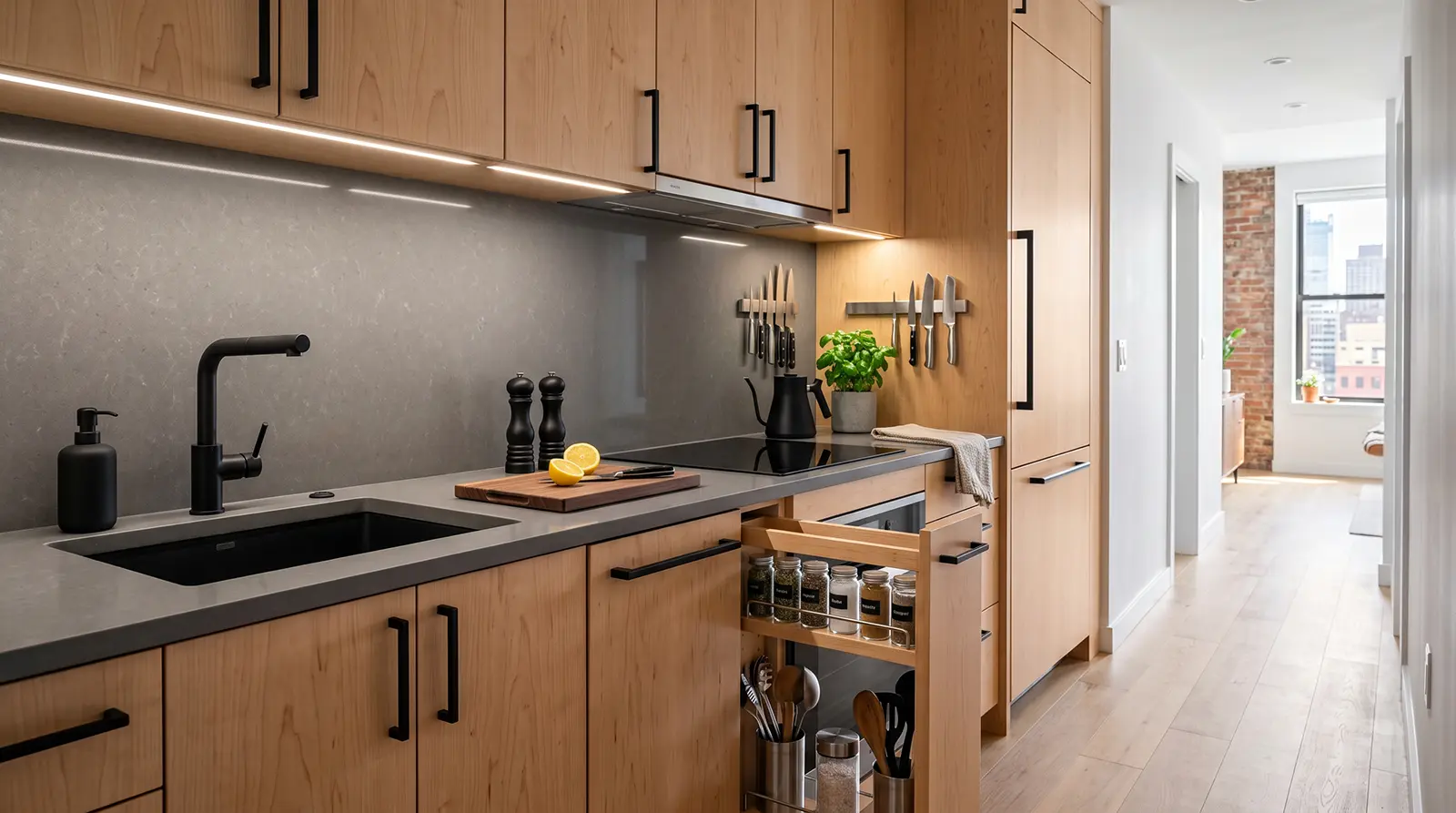
Quartz countertops are engineered stone surfaces made from quartz minerals combined with resins and pigments. They are popular because they offer a controlled appearance, broad color selection, and lower maintenance than many natural stones.
For homeowners who want a clean kitchen surface that does not require sealing, quartz is often one of the most practical choices. It is nonporous, which means it resists many common kitchen stains and is easier to maintain with regular cleaning. It can also imitate the look of marble, concrete, limestone, or subtle natural stone without the same level of porosity or etching risk.
Quartz works especially well in smaller NYC kitchens where the countertop must stay visually quiet. A soft white, warm gray, or lightly veined quartz can make a compact kitchen feel cleaner and more open. In medium kitchens, quartz can support a consistent design across counters, islands, and backsplash areas without the variation that comes with natural stone.
The main caution is heat. Quartz can tolerate normal kitchen use, but very hot pots, pans, or baking sheets should not be placed directly on the surface. Trivets remain important because resin-based surfaces can be affected by sudden or sustained high heat.
Quartz is a strong choice when the homeowner wants predictability: predictable color, predictable care, predictable performance, and fewer natural variations from slab to slab.
Marble Countertops: Natural Beauty With Higher Maintenance
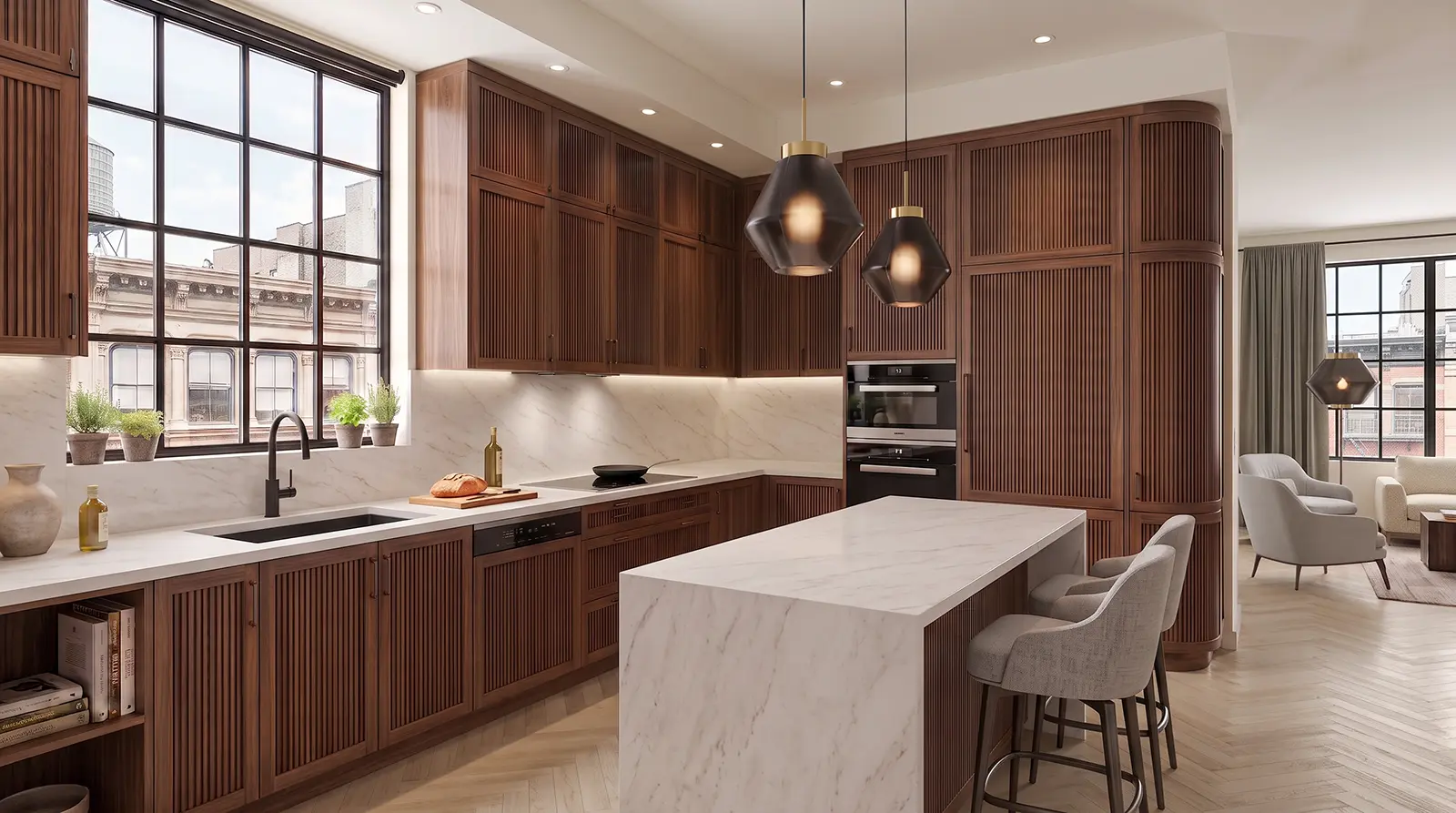
Marble is one of the most visually recognizable countertop materials. Its veining, softness, and depth can give a kitchen a quiet architectural presence that engineered surfaces often try to imitate. In the right setting, marble can make a kitchen feel established, calm, and connected to traditional stone craftsmanship.
Marble is also one of the materials that requires the most realistic expectations. It is sensitive to acids such as lemon juice, vinegar, wine, tomato, and certain cleaners. These substances can etch the surface, leaving dull marks even when the stone is sealed. Marble can also stain if spills are left too long, especially around coffee, oil, red wine, and heavily used prep zones.
This does not make marble a poor choice. It means marble should be chosen by someone who understands how it will age. Some homeowners appreciate the patina that develops over time. Others expect the surface to remain visually perfect. Those expectations should be discussed before the material is selected.
Marble is often better suited to kitchens where the owner values character over low maintenance. It can work beautifully on an island, a baking counter, a backsplash, or in a kitchen where daily use is thoughtful and cleaning habits are consistent. It may be less suitable for a compact apartment kitchen where one small counter zone handles every task: coffee, cooking, cutting, serving, cleaning, and storage.
When marble is used, the specific stone, finish, sealing approach, edge profile, and maintenance plan matter. Honed finishes can make some etching less visually obvious than polished finishes, but they do not eliminate the underlying sensitivity of the material.
Quartzite Countertops: Natural Stone With Strength and Movement
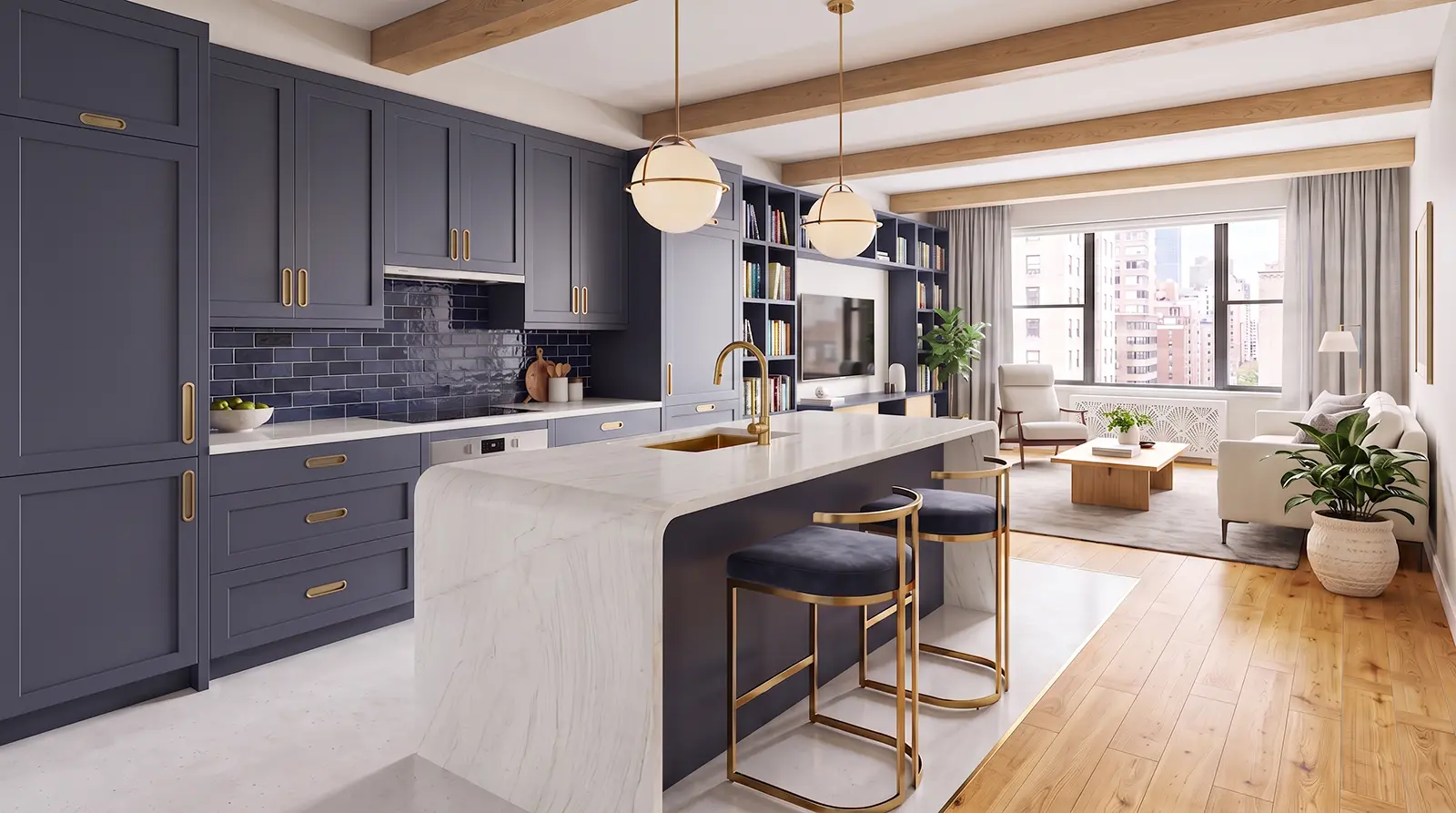
Quartzite is a natural stone that often appeals to homeowners who like the look of marble but want greater durability. Many quartzites have strong movement, depth, and veining, while offering better hardness and performance than marble in everyday kitchen use.
True quartzite is generally more resistant to scratching and acid damage than marble. It can be a good choice for homeowners who want natural stone with a more durable surface. It works well on islands, larger counter runs, and kitchens where the stone is intended to be a visible part of the design.
The important word is “true.” Some stones sold under quartzite-like names may behave more like marble or dolomitic stone. That can change the way the surface responds to acids, sealers, stains, and daily use. For that reason, quartzite should be reviewed carefully with the fabricator or stone supplier before selection.
Quartzite may still need sealing, depending on the specific stone. Like other natural stones, its porosity can vary. Areas near the sink, coffee station, and cooking zone should be considered carefully because they receive more moisture, oils, and cleaning.
In medium and larger kitchens, quartzite can be a strong option when the homeowner wants the individuality of natural stone and is willing to coordinate slab selection, seam placement, veining direction, and edge detail. It is often more expensive than basic quartz or some granites, but its visual depth can be difficult to replicate.
Porcelain Slab and Sintered Stone Countertops: Thin, Strong and Modern
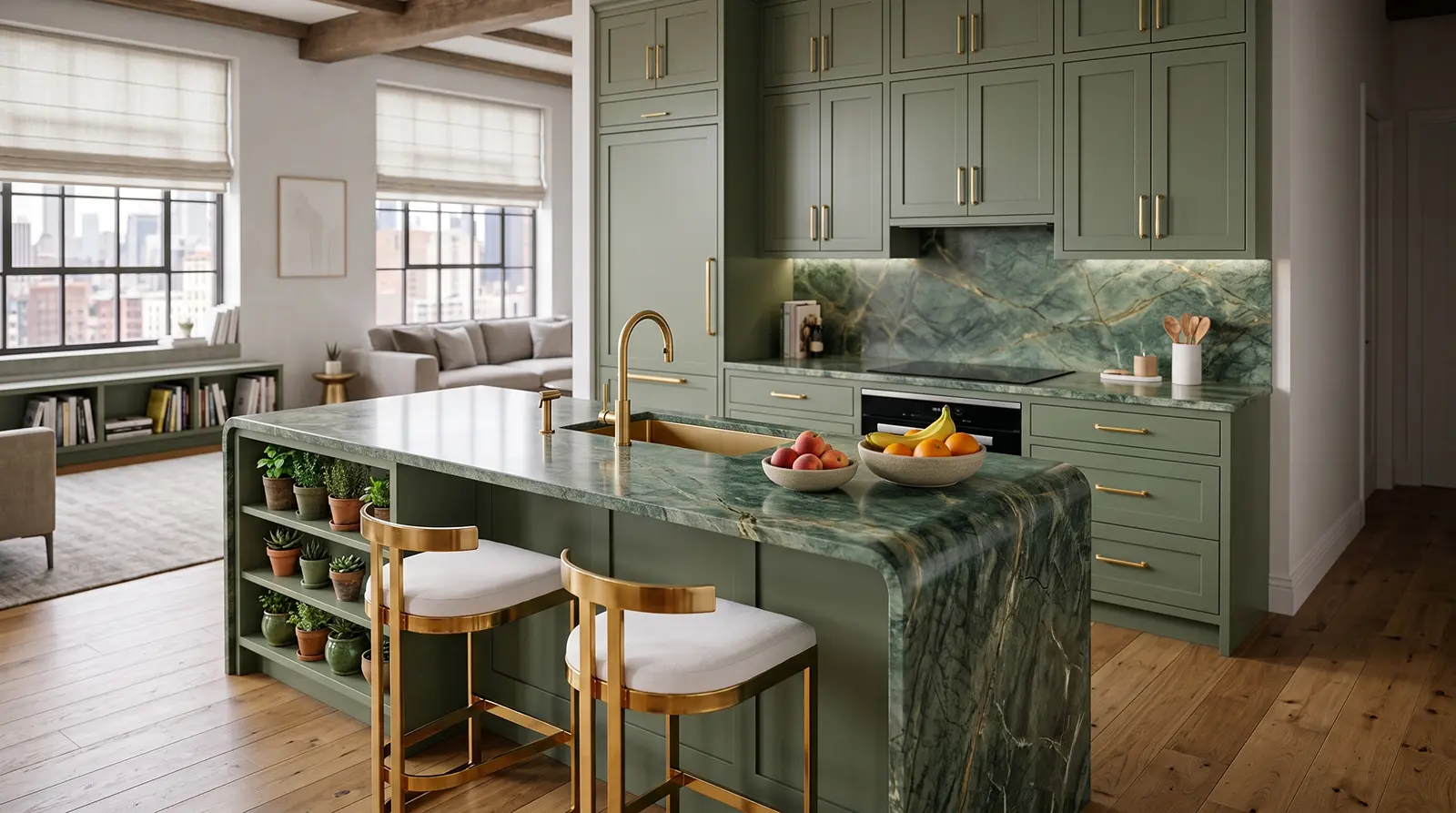
Porcelain slab and sintered stone countertops are often selected for modern kitchens that need large-format surfaces, thin profiles, strong stain resistance, and a clean architectural look. These materials can be used for countertops, full-height backsplashes, waterfall panels, wall cladding, and sometimes integrated surfaces across several planes.
Their practical appeal is clear. Porcelain and sintered surfaces are typically resistant to stains, heat, scratches, and UV exposure. They are nonporous, so they do not require sealing in the same way many natural stones do. This makes them attractive for homeowners who want a low-maintenance material with a refined visual language.
Porcelain slab can be especially effective when the countertop and backsplash are designed as one continuous material plane. In a small kitchen, this can reduce visual breaks. In a larger kitchen, it can create a precise, contemporary surface with fewer grout lines than tile.
The caution is fabrication. Thin porcelain slabs and sintered materials require experienced handling, cutting, transport, and installation. Edges, sink cutouts, cooktop cutouts, seams, and impact points need careful planning. Chips can be more difficult to repair than minor marks in some natural stones.
This material works best when the design team knows how the slab will be used before fabrication begins. A porcelain countertop may look minimal, but the technical decisions behind it are not casual.
Granite Countertops: Not Outdated When the Stone Is Chosen Carefully
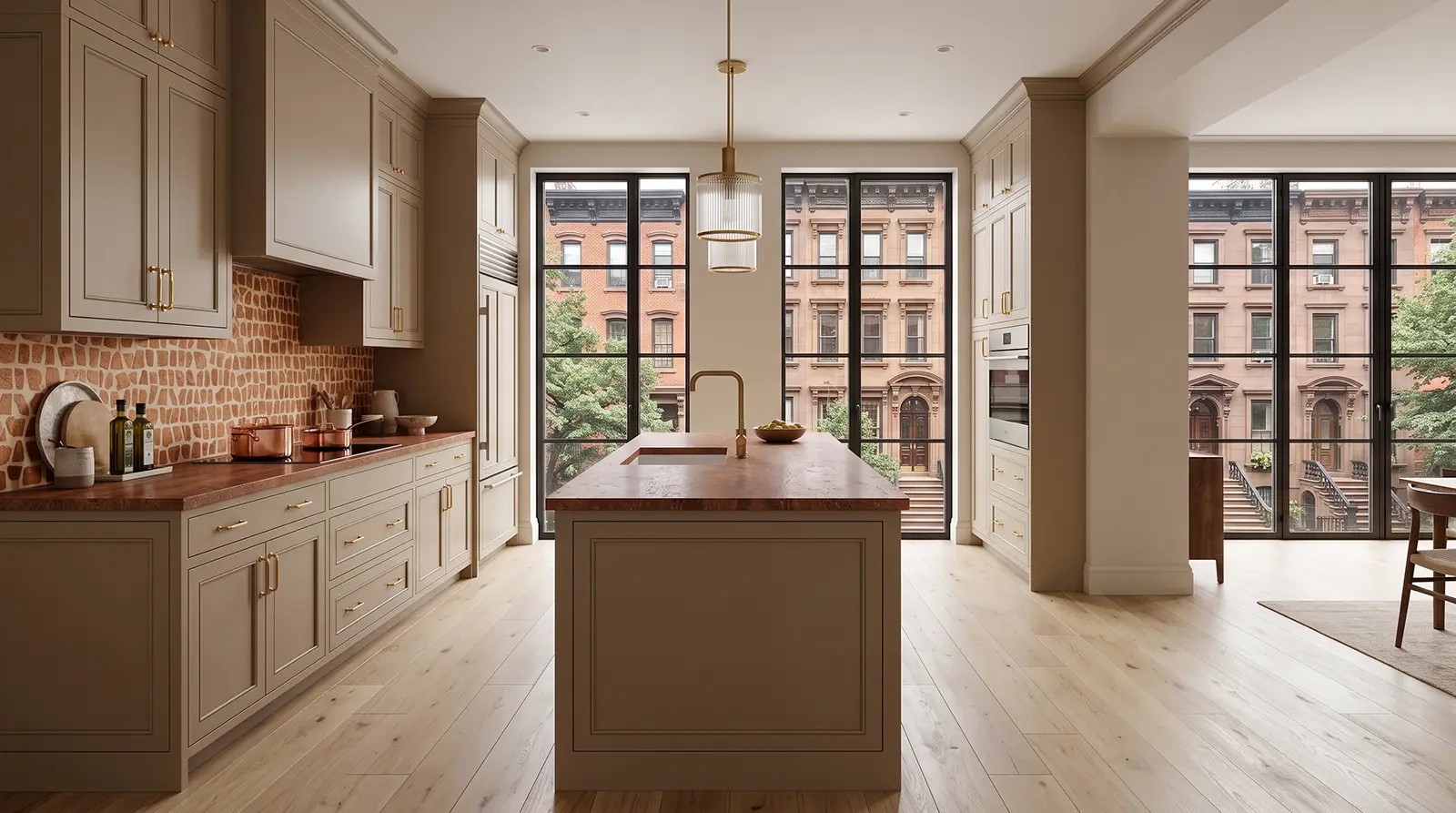
Granite has sometimes been dismissed as dated because many people associate it with highly polished, heavily speckled kitchens from past decades. That view is too broad. Granite is not one look. It is a category of natural stone with many colors, patterns, finishes, and levels of visual movement.
The more current use of granite often depends on restraint. A honed black granite, leathered dark stone, quiet gray slab, or carefully selected white granite can feel very different from the busy, glossy patterns associated with older kitchens. In the right context, granite can be durable, calm, and visually grounded.
Granite is generally known for strong durability, heat resistance, and scratch resistance. It can perform well in kitchens that are used heavily, especially when the selected stone is dense and properly maintained. It may need sealing depending on the stone, finish, and level of porosity.
The design risk is not granite itself. The risk is choosing a stone, finish, edge profile, or cabinet pairing that makes the kitchen feel dated. A thick bullnose edge, high-gloss finish, busy speckled slab, and warm traditional cabinetry can create a very different effect than a honed or leathered slab with clean cabinetry and careful lighting.
Granite can still make sense for NYC kitchens when it is selected with the same care given to quartzite or marble. The question is not whether granite is “in” or “out.” The question is whether the exact slab, finish, and detailing support the kitchen being built.
Which Countertop Materials Work Best in Small, Medium and Large Kitchens?
Kitchen scale changes how countertop materials behave visually and practically. A slab that looks controlled in a showroom can feel too active in a compact kitchenette. A surface that looks subtle on a small sample may become too flat across a large island. Scale should guide the decision.
Small Kitchenettes and Compact NYC Kitchens
Small kitchenettes usually benefit from countertop materials with quieter patterns, easier maintenance, and fewer visual interruptions. Quartz, porcelain slab, and subtle granite can work well because they can keep the kitchen calm while supporting daily use.
In a compact kitchen, the counter often serves every function: prep area, coffee station, landing zone, serving surface, and sometimes work-from-home overflow. Low-maintenance materials are valuable because the surface is used constantly.
Strong marble veining or dramatic quartzite can work in a small kitchen, but it needs restraint. A heavily patterned surface may make the room feel busier, especially if the cabinetry, backsplash, hardware, and flooring already have texture or contrast.
Medium Kitchens
Medium kitchens allow more flexibility. Quartz remains practical, quartzite can introduce natural movement, marble can work for homeowners who accept maintenance, and granite can be very effective when the slab is quiet and well detailed.
This scale often allows the countertop to connect several design elements: lower cabinetry, wall cabinets, backsplash, island or peninsula, and lighting. Material consistency becomes important. If the kitchen has multiple counter runs, seam placement and slab matching should be reviewed before fabrication.
A medium kitchen may also support a stronger edge profile or a short waterfall panel, but those details should not be added automatically. They need to work with cabinet proportions and the surrounding room.
Large Kitchens and Loft Kitchens
Large kitchens, open-plan kitchens, and loft kitchens can support more expressive stone. Quartzite, marble, granite, porcelain slab, and sintered stone can all work when the scale allows the material to breathe.
A large island can become the main stone feature. This is where veining direction, bookmatching, waterfall panels, slab size, overhangs, and seam locations become more visible. Strong materials need careful coordination so the kitchen feels intentional rather than busy.
In loft kitchens, countertop material also has to respond to the room’s architecture. High ceilings, large windows, exposed structure, wood floors, and open living areas can make the countertop part of a much larger composition. The stone should not be selected in isolation from cabinetry, flooring, millwork, and lighting.
Design Details That Change How a Countertop Performs
The material itself is only one part of countertop performance. Fabrication details can change how the surface looks, functions, and ages.
Edge profiles affect both the visual weight and the durability of the counter edge. A thin eased edge can feel modern and quiet. A mitered edge can create the appearance of a thicker slab. More ornate profiles may suit traditional kitchens but can feel heavy in compact apartments.
Thickness changes the relationship between the countertop and cabinetry. Thin porcelain or sintered stone can look precise and architectural. Thicker stone or mitered edges can give an island more presence. The right choice depends on cabinet style, room scale, and material type.
Seams are especially important in NYC apartments, where elevator access, corridors, stair conditions, slab size, and installation routes may limit what can be delivered and installed. A beautiful stone can lose impact if the seam cuts across a prominent veining pattern.
Backsplash decisions also matter. A matching slab backsplash can look clean and reduce grout lines. Tile can add texture and rhythm. A short stone return may be practical in some kitchens, but it can also look unfinished if not coordinated with the rest of the wall design.
Waterfall panels should be used with intention. They can protect cabinet sides, emphasize the material, and make an island feel more architectural. They also add cost, weight, stone quantity, fabrication complexity, and installation requirements.
Cost Considerations for Kitchen Countertops
Countertop cost depends on more than the material name. Quartz, marble, quartzite, porcelain slab, sintered stone, and granite each have entry-level, mid-range, and premium options. A rare stone, complex veining, bookmatched slabs, large islands, waterfall panels, thick mitered edges, slab backsplashes, and difficult installation conditions can all increase cost.
In NYC apartments, logistics may also affect the budget. Delivery routes, building rules, elevator size, protection requirements, service entrance access, work-hour limits, and coordination with building management can influence installation planning.
Quartz is often chosen for predictable cost and maintenance. Granite can range widely depending on the slab. Marble can become expensive when rare varieties or large, carefully matched slabs are selected. Quartzite is often a premium natural stone category. Porcelain and sintered stone may appear efficient as a surface material, but fabrication and installation complexity can affect the final number.
The safest approach is to compare installed cost, not slab cost alone. The final countertop budget should include templating, fabrication, cutouts, edge profiles, seams, backsplash, delivery, installation, supports, and any coordination required with cabinetry or appliances.
What to Confirm Before Selecting a Countertop Material
A countertop should not be selected only from a small sample. Samples are useful for color and texture, but they rarely show full movement, veining, variation, or how the material will look across an entire kitchen.
Before final selection, confirm:
- The full slab or large-format image, not only a small sample.
- Thickness and edge profile.
- Finish: polished, honed, leathered, matte, or textured.
- Sealing requirements for natural stone.
- Stain and etching expectations.
- Heat precautions.
- Scratch resistance and repair options.
- Seam locations.
- Sink and cooktop cutouts.
- Backsplash height and material.
- Waterfall panel requirements, if any.
- Cabinet support and overhang limits.
- Delivery access through the building.
- Lead time for slab approval, fabrication, and installation.
These details are not secondary. They determine whether the selected material will perform well once it becomes part of the kitchen.
FAQ: Types of Kitchen Countertops
What are the most popular types of kitchen countertops?
The most common types of kitchen countertops include quartz, marble, quartzite, porcelain slab, sintered stone, and granite. Each material offers a different balance of durability, maintenance, cost, appearance, and fabrication requirements.
What is the lowest-maintenance kitchen countertop material?
Quartz, porcelain slab, and sintered stone are generally among the lowest-maintenance countertop options because they are nonporous and do not require sealing. Heat precautions, edge protection, and proper cleaning still matter.
Is marble a good material for kitchen countertops?
Marble can be an excellent design choice for homeowners who appreciate natural veining and accept patina, etching, and more careful maintenance. It is less suitable for homeowners who expect a surface to remain visually unchanged over time.
Is quartzite better than marble for kitchen countertops?
Quartzite is usually harder and more durable than marble, but the specific stone must be verified. Some stones sold under quartzite-related names may behave differently. A reliable supplier or fabricator should confirm how the slab responds to staining, sealing, and acid exposure.
Are granite countertops outdated?
Granite countertops are not automatically outdated. Some older granite patterns and finishes may feel dated, but honed, leathered, dark, quiet, or carefully selected granite can work well in a contemporary kitchen. The final result depends on the slab, finish, edge profile, cabinetry, and lighting.
Are porcelain slab countertops durable?
Porcelain slab and sintered stone countertops are generally resistant to heat, stains, scratches, and UV exposure. Their performance depends on correct fabrication and installation, especially at edges, cutouts, seams, and impact-prone areas.
Which countertop material is best for a small NYC kitchen?
Small NYC kitchens often benefit from quartz, porcelain slab, subtle granite, or quiet quartzite because these materials can provide durability without adding too much visual movement. The best choice depends on the layout, cabinetry, lighting, and how much maintenance the homeowner is willing to accept.
When should countertop material be selected during a kitchen renovation?
Countertop material should be selected before final cabinetry fabrication and before backsplash, sink, cooktop, island, and edge details are locked. Early selection helps coordinate dimensions, seams, supports, appliance clearances, and installation timing.
The Right Countertop Material Depends on Use, Scale and Detail
There is no single best countertop material for every kitchen. Quartz offers consistency and low maintenance. Marble offers depth and natural character. Quartzite brings strength and movement. Porcelain slab and sintered stone support thin profiles and modern surfaces. Granite remains durable and relevant when the slab and finish are selected carefully.
The stronger decision comes from matching the material to the kitchen’s scale, the homeowner’s maintenance expectations, and the technical requirements of the renovation. In a small apartment, that may mean choosing a quiet, durable surface that keeps the room visually calm. In a larger kitchen, it may mean using stone as part of the architecture through an island, full-height backsplash, or waterfall panel.
A countertop is not a separate decorative layer. It is part of the working kitchen. When material, fabrication, cabinetry, lighting, and installation are planned together, the finished surface can support both daily use and the long-term character of the home.